

Why Experience at Scale Matters: Ironwood's Large Scale Event Security Background
The Great American State Fair spanned 16 days and drew hundreds of thousands of visitors to the National Mall. Large scale event security like this takes real operational experience.
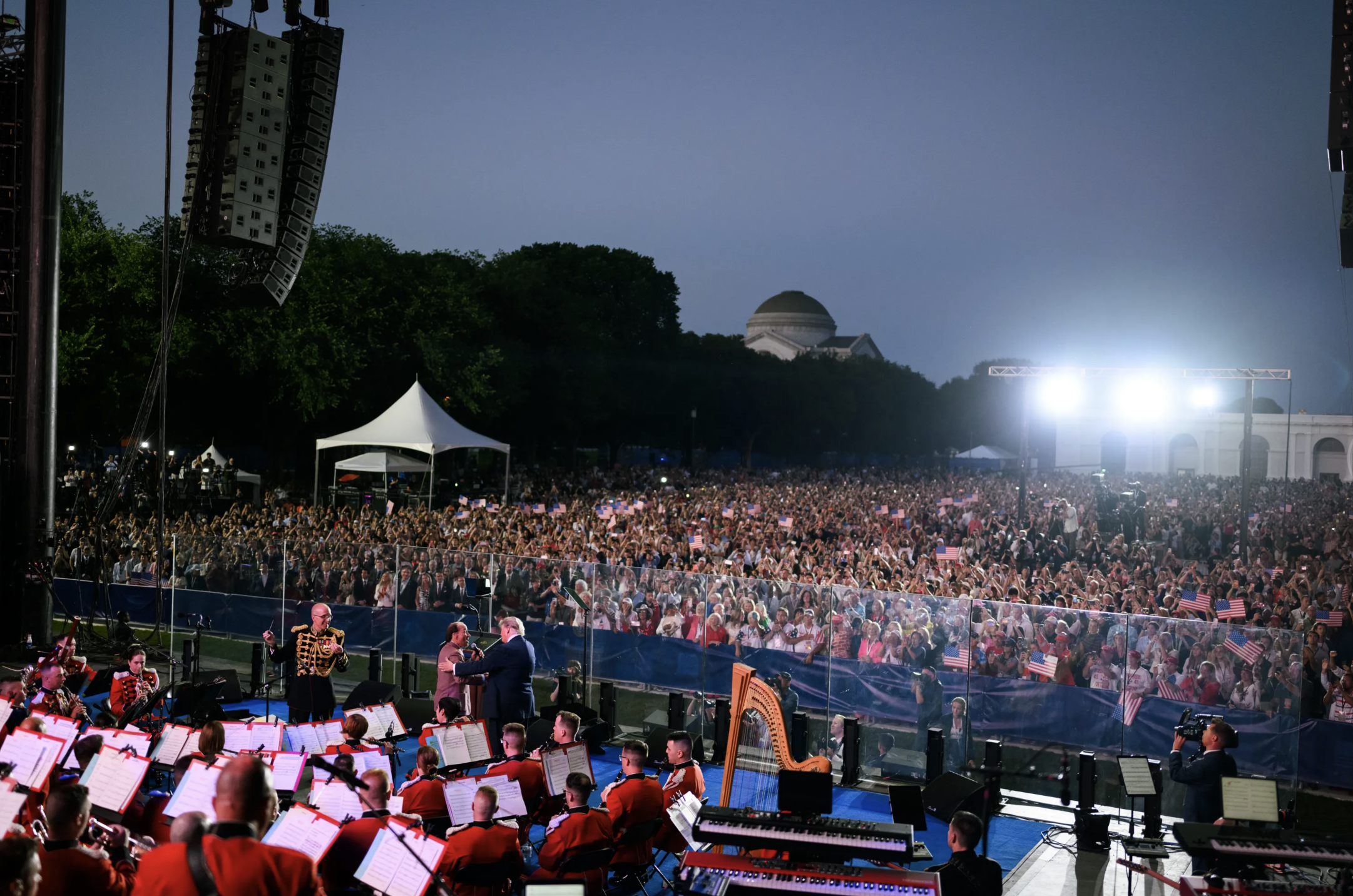
Photo: Diplomatic Security Service
The Great American State Fair and Salute to America gave Washington, D.C. something the city rarely sees even once in a year, let alone twice in the same stretch of summer: two enormous events sharing the same National Mall footprint within days of each other. The fair ran sixteen days between the Capitol and the Washington Monument, drawing a reported 200,000 plus visitors across its run. Salute to America then brought hundreds of thousands more back to the same grounds in a single evening for a record setting fireworks finale. Managing security at this scale is a different discipline than managing it for a smaller venue, and it is not something a team can learn on the fly.
Scale changes everything about how a large event security plan must be built. A venue with a few thousand attendees might have one or two natural entry points and a team that can maintain a clear line of sight across most of the space. Reports put the security presence at close to five thousand National Guard members drawn from twenty-three states plus the District, working alongside Secret Service and local law enforcement. That is not a number you reach with good intentions. It takes direct experience with venues of that size to know how to deploy a force that large without creating confusion on the ground.
This is where Ironwood's operational background becomes central to how we work. Our teams have supported large scale events where the margin for error is smaller precisely because the number of people involved is so much larger. We have learned, through direct experience rather than theory, how quickly conditions change across a large footprint, how communication has to be structured so information moves fast enough to matter across a multi block site, and how coordination with venue operators, vendors, and multiple layers of law enforcement has to be built into the plan from day one instead of added as an afterthought.
Large venues also bring logistical realities smaller events simply do not have. A sixteen-day footprint means shift changes, fatigue management, and staffing continuity become part of the plan, not just an internal scheduling concern. Extreme heat, like the record 102 degree days that forced evacuations during the fair, becomes an operational factor with its own protocols, not an afterthought. A record-breaking fireworks display of more than 851,000 individual shells requires its own safety perimeter and timing coordination on top of everything already in motion for crowd control. Experience is what lets a security team anticipate these factors instead of discovering them in real time, in front of a national audience.
What happened on the National Mall this year reinforced something we already knew from years of supporting events like these: preparation at scale looks different, and it has to be built by people who have done it before. There is no substitute for having managed the reality of a hundred-thousand-person footprint, because the lessons learned at that scale simply do not show up anywhere else.
That is the experience Ironwood brings to every large-scale event we support, and it is why organizers trust us with the venues where the stakes, and the crowds, are the largest.
